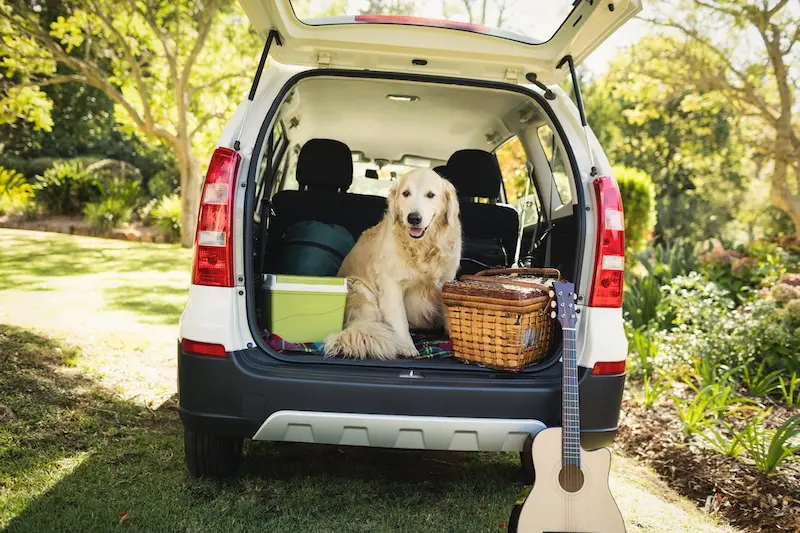
Dog travel anxiety can put a real pawse on your summer plans, but it doesn’t have to! Whether you’re dreaming of a sun-soaked beach break, a ramble through the countryside, or a sun-filled road trip, summer is basically the season your dog was made for!
The trouble is, not every pup sees the journey as part of the fun. Car journeys, new smells, unfamiliar places, and the general chaos of summer can leave some dogs feeling more stressed out than stretched out.
But with a little planning and the right know-how, dog travel anxiety is absolutely manageable, and your next adventure together can be every bit as tail-wagging as you’ve imagined!
What causes dog travel anxiety during summer trips?
Understanding what is going on behind those worried eyes is crucial to fixing it. For most dogs, the destination is not the problem; it’s everything that happens between the front door and arrival that gets them in a flap!
New places, new sounds and new smells
Dogs are creatures of habit, and they like their world to make sense. Familiar sights, smells and sounds are basically their version of a comfort blanket.
Summer trips tend to throw all of that out the window at once: unfamiliar cars, unusual accommodation, new people, different dogs, heavy traffic, packed beaches, buzzing campsites. Sometimes all in a single afternoon. Even the most laid-back, nothing-bothers-me dog can start feeling unsure when everything around them changes overnight.
Going from the cosy predictability of home to a completely new environment is a lot to take in, and some dogs just need a little more time to catch up!
Heat, crowds and busy holiday routines
Summer doesn’t just bring new places; it brings a whole extra layer of sensory chaos on top.
Warmer weather, crowded outdoor spaces, longer and more stimulating days, excitable children, and busier roads all pile additional pressure onto dogs that are already working hard to adjust. It’s also important to know that physical discomfort makes anxiety worse; a dog that is too warm is much less likely to settle and much more likely to be on edge.
Keeping these seasonal stressors in mind from the start means owners can plan journeys that are a little kinder on their four-legged travel companion.
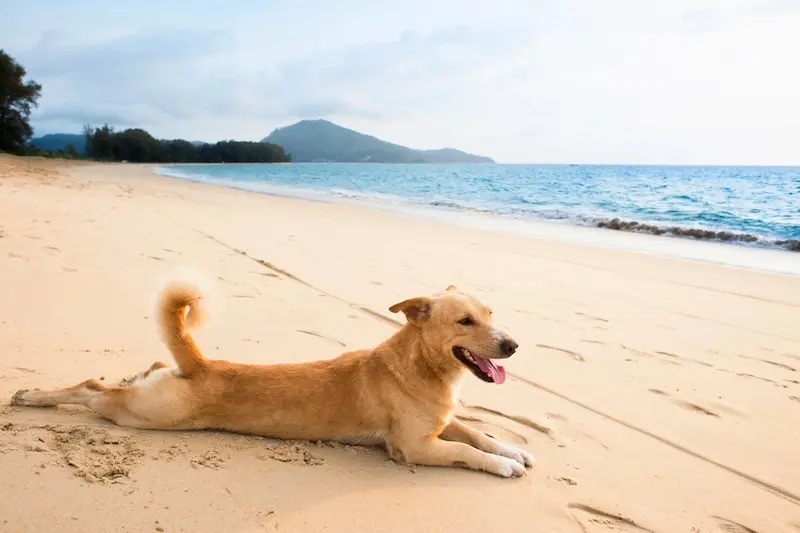
Common dog travel anxiety behaviours to watch out for
Catching anxious behaviour early makes it far easier to step in before things go from mildly unsettled to full-on stressed. The tricky part is that anxiety doesn’t always announce itself loudly; the signs can be subtle, easy to miss, or easy to write off as something else entirely.
During a car journey or in a new place, keep an eye out for:
- Panting when it is not actually warm
- Whining, barking or persistent pacing
- Trembling or attempts to hide
- Excessive drooling
- Refusing food or treats they would normally inhale without hesitation
- Restlessness and an inability to settle in the car
- Attempts to escape or velcro-dog levels of clinginess
- Upset stomach or travel sickness-style symptoms
If a dog is ticking any of these boxes, it might mean they’re struggling and could do with a bit of extra patience and reassurance. No bad dogs here, only overwhelmed ones!
Tips for reducing dog travel anxiety this summer
Start with short, positive practice journeys
For dogs that are new to travel, or those that have had a rough experience with cars in the past, the worst thing to do is wait until the big holiday drive to find out how they feel about it. The best approach is to ease them in gradually, starting well before departure day.
Begin with short, calm trips, even just five or ten minutes, and slowly build up to longer journeys over time. Whenever possible, end each trip somewhere good: a favourite park, a familiar walking route, or a relaxed visit to someone they already love.
Pair every journey with plenty of gentle encouragement, calm praise and small treats to start building a positive association with the car. It is also worth mixing things up so that not every car trip ends at the vet, as that particular pattern tends to stick in a dog’s memory in entirely the wrong way!
A handful of easy practice runs is a small investment that pays off handsomely when the big travel day finally arrives.
Keep the journey cool, calm and comfortable
A dog that feels physically comfortable is far more likely to stay emotionally settled, and summer travel comes with a few specific considerations that are well worth thinking through before setting off:
- Keep a travel bowl and fresh water within easy reach throughout the journey
- Factor in regular stops for toilet breaks, a drink, and a chance to stretch all four legs
- Where possible, avoid travelling during the hottest part of the day
- Keep the car well ventilated and make use of sunshades or cooling mats
- Never leave a dog alone in a parked car, even for a few minutes in warm weather; the temperature inside rises faster than most people expect
- Use rest stops at shaded spots to give dogs a proper chance to decompress and reset before the next leg of the journey
A dog that arrives feeling physically well is in a completely different headspace from one that has spent hours cooped up, overheated, and thoroughly fed up!
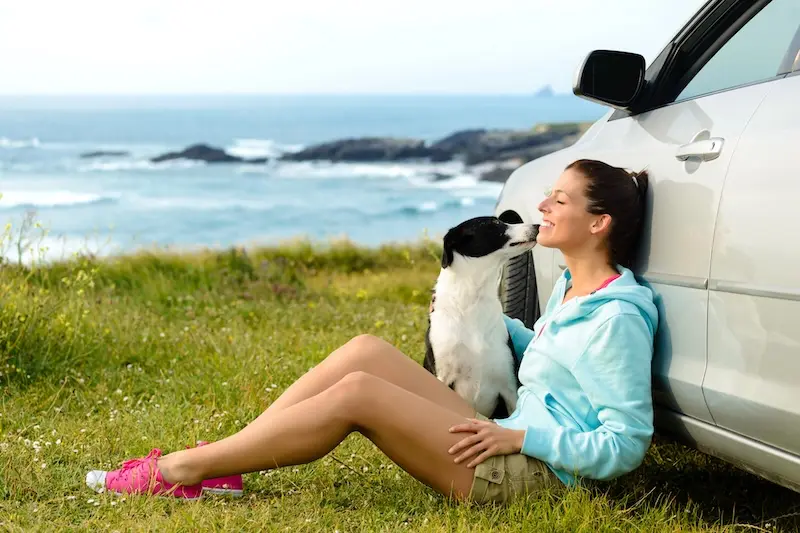
Bring familiar comforts from home
Sometimes the simplest tricks are the most effective, and this one is about as simple as it gets; when in doubt, bring home with you.
Familiar smells and objects can be genuinely transformative for a nervous dog.
Before setting off, pack a favourite blanket or the dog’s usual bed, a well-loved toy, a safe chew or enrichment activity for the journey, a towel or piece of clothing that smells reassuringly like home, and the dog’s regular food and treats. Settling these items into the car before departure and then arranging them again at the destination gives the dog a consistent sensory anchor amidst all the unfamiliarity.
It is a small gesture that sends a big message: you are safe, even here!
Meals, walks, and bedtime still matter!
Holiday mode is wonderful for humans, with routine out the window, late nights and spontaneous adventures. Dogs, however, didn’t get that memo, and they are much happier with a little predictability in their day!
Dogs feel more secure when things follow a recognisable rhythm. Keeping meal times, walks and bedtime roughly in line with the usual home schedule, even while away, can make a noticeable difference to how settled and confident a dog feels.
Try not to overwhelm them with too many new experiences on the very first day either. After a long journey, give them quiet time to decompress before diving into activities, and let them find their feet at their own pace. It’s not the most exciting travel tip, but a dog that knows when dinner is coming is a much more relaxed travel companion!
A quiet corner can make a big difference
Arriving somewhere brand new can be just as unsettling as the journey itself, especially for dogs that are already a little on the anxious side.
As soon as the family lands at the accommodation, the first job is to set up the dog’s bed or blanket in a calm, quiet corner; before the unpacking, before the excited hellos, before anything else.
Let the dog explore the new space at their own pace rather than fast-tracking introductions to new people, children or other pets. Having a designated spot to retreat to when things get a bit noisy or overwhelming can be enormously reassuring; think of it as their own little holiday refuge. A dog with a safe base to return to is far more likely to relax, settle in, and actually enjoy the break!
Reduce dog travel anxiety with fun distractions
Keeping a dog’s mind gently occupied is one of the handiest tools in the whole travel anxiety toolkit, and thankfully, it is also one of the most enjoyable to put into practice.
Gentle enrichment activities tap into a dog’s natural instincts and have a genuinely calming effect. Licking, chewing, and sniffing are all self-soothing behaviours, and a nose that is happily busy tends to belong to a much calmer passenger!
Before setting off, consider packing a lick mat loaded with a favourite paste, a safe chew, a food puzzle or a snuffle mat for the car. These distractions work best when they are supervised, travel-safe and suited to the individual dog. They also double up brilliantly as a wind-down tool after a big day at the beach or campsite, giving dogs a chance to quietly decompress before bedtime.
A tired, sniffing, happily licking dog is, in most cases, a very settled one!

Help your dog enjoy calmer summer adventures with VETIQ
All the practical steps above can make a genuine difference, but for dogs that need a little extra support, VETIQ’s Serene Calming range is worth having in the travel bag alongside the snacks and the spare lead.
Designed specifically for stressful moments like travel and separation anxiety, the Serene Calming range has something for every dog and every situation:
- Serene Calming Ointment — a fast-acting option for sudden anxious moments, applied directly to the nose for relief within 20 minutes
- Serene Calming Tablets — natural ingredients to keep nervous or hyperactive cats and dogs calm without any sedative effect
- Serene Calming +Plus Tablets — ideal for larger or hyperactive dogs, with essential amino acids, vitamins and minerals to combat tension and stress
- Serene Calming Drops — daily calming support that helps reduce anxiety and promote relaxed behaviour without drowsiness
- Serene Calming Supplement Chews — tasty roasted meat flavour chews that turn anxiety support into something that feels more like a treat than a treatment
Whether a long road trip, a weekend camping escape, or a sun-soaked beach break is on the cards this summer, the right preparation, paired with a little help from VETIQ, can make all the difference.
Here’s to calmer journeys, happier dogs, and holidays that every member of the family actually enjoys!
Dog travel anxiety during summer FAQs
Q: What do we mean by “dog travel anxiety”?
A: Dog travel anxiety is stress or nervousness triggered by journeys, new environments, unfamiliar sounds, different smells, busy places, or changes in routine. We often see it during car trips, holidays, camping breaks, beach visits, or summer road trips!
Q: What causes dog travel anxiety during summer?
A: Dog travel anxiety during summer can be caused by unfamiliar cars, new locations, heavy traffic, crowds, heat, unusual accommodation, other dogs, and disrupted routines. Warm weather can also make discomfort and anxiety worse.
Q: What are the signs of travel anxiety in dogs?
A: Panting, whining, barking, trembling, pacing, drooling, hiding, refusing food, clinginess, restlessness, travel sickness symptoms, and attempts to escape.
Q: How can dog owners reduce dog travel anxiety before a holiday?
A: We recommend starting with short, positive practice journeys before the main trip. Calm praise, small treats, familiar destinations, and gradual journey increases can help dogs build a more positive association with travel.
Q: How can dogs be kept calm during long car journeys?
A: Dogs can be kept calmer during long car journeys by using regular breaks, fresh water, ventilation, sunshades, cooling mats, familiar blankets, safe chews, lick mats, and quiet reassurance throughout the journey.
Q: Do familiar items help dogs with travel anxiety?
A: Yes, familiar items can help dogs feel more secure while travelling. A favourite blanket, bed, toy, chew, regular food, or clothing that smells like home can provide comfort in unfamiliar places.
Q: Why is routine important for dogs on holiday?
A: Routine helps dogs feel safe and settled. Keeping meals, walks, toilet breaks and bedtime close to the usual home schedule can reduce stress and make summer holidays easier for anxious dogs.
Q: Do VETIQ offer any products that can help with dog travel anxiety?
A: Yes! VETIQ’s Serene Calming range is designed to support pets during stressful moments, including travel anxiety!
Q: Are VETIQ Serene Calming products sedative?
A: No, VETIQ Serene Calming products are designed to help calm and relax pets without a sedative effect. The range includes options for daily support, sudden anxious moments and short-term or longer-term stress!