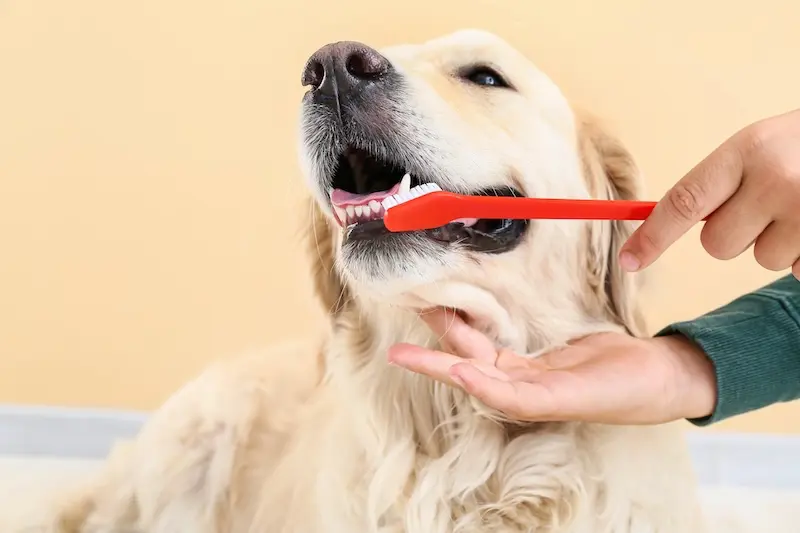
Learning how to clean your pet’s teeth is one of those jobs that sounds like a hassle until you actually get started, and then it turns out to be far less dramatic than the mental wrestling match you’d built it up to be in your head!
Every pet parent knows dental care matters, sitting somewhere between “important” and “if I have five minutes” on the to-do list. But those pearly whites do a lot of work, chewing, chomping and the occasional over-enthusiastic snack raid, so a little regular care goes a long way.
The good news is that cleaning your pet’s teeth doesn’t have to be a battle of wills. With the right approach and a healthy stash of treats on standby, it can become just another cosy part of your routine, so here are 5 solid tips to get you there!
How to clean your pet’s teeth: why it matters for long-term health
Understanding why dental care matters makes the whole job feel a lot less like a chore. Just like us, pets build up plaque on their teeth every single day, no biscuits required! Left alone, that plaque hardens into tartar, and tartar is a much tougher customer to shift.
Plaque, tartar and gum disease explained
Plaque forms within hours of a meal and hardens into tartar within days. Once tartar creeps below the gum line, it can lead to gingivitis and, over time, more serious gum disease, not exactly the toothy grin you want for your furry friend!
The cost of ignoring dental care
Skip dental care for too long, and you’re not just looking at less-than-fresh kisses. Loose teeth, infections, and genuine discomfort can follow, along with vet bills that run considerably higher than a bit of regular upkeep. Prevention really is the cheaper, kinder option.
5 tips for how to clean your pet’s teeth
#1: Start slow and build a positive routine
Diving straight in with a full brushing session on day one is the fastest way to put your furry baby off the whole idea.
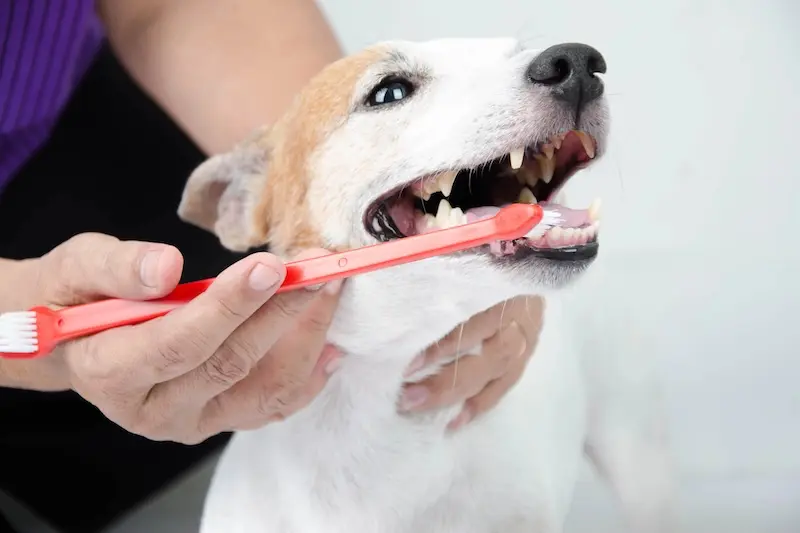
Start small: a gentle finger rub along the gums for a few seconds is plenty to begin with. Once your pet’s comfortable with that, work up to a soft cloth, then a finger brush, then a proper toothbrush. Some pets get there in days, others take a few weeks, and that’s absolutely fine.
Pair each session with something your pet already loves, a treat, a favourite toy, or a walk the second you’re done. Even 30 seconds counts as a win, so keep sessions short and always end on a good note before anyone loses patience.
#2. Use the right tools for the job
The right kit makes a bigger difference than most pet parents expect.
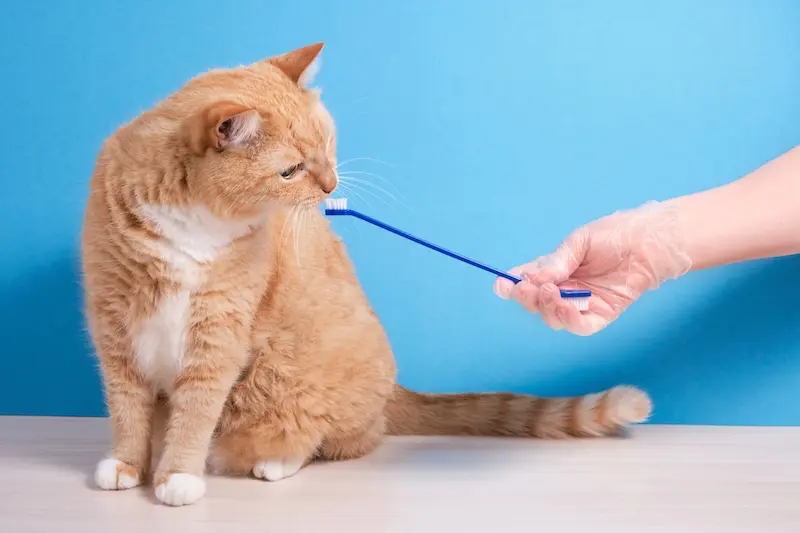
A finger brush is often the friendliest place to start, giving you more control and feeling far less intimidating than a full-sized brush. Long-handled toothbrushes suit pets once they’re settled into the routine, and a bit of gauze wrapped around your finger works nicely for smaller mouths.
Human toothpaste is a hard no; it often contains fluoride and xylitol, both toxic to pets. Pet-safe toothpaste is designed to be swallowed and usually comes in flavours like poultry or malt, which helps turn even the fussiest patient into a willing participant.
#3. Explore no-brush alternatives if brushing isn’t working
Some pets simply won’t tolerate a brush, no matter how patient (or persuasive) you are, and that’s okay too.
Dental powders mixed into food, sprays applied straight onto teeth and gums, and additives poured into the water bowl are all designed to help reduce plaque and freshen breath, brush-free. They won’t do everything brushing does, but they’re a genuinely handy option when brushing just isn’t happening.
Cats who vanish at the sight of a toothbrush, senior pets with sensitive mouths, nervous or rescue animals, and puppies who aren’t quite ready for brushing yet all tend to get on well with these no-brush options!
#4. Support oral health through diet and chews
What goes in your pet’s bowl plays its part too.
Chewing gives teeth a natural scrub, so durable chews and toys sized right for your pet help support the job brushing does. Go too hard, and you risk a cracked tooth; too soft, and there’s not much scrubbing happening at all.
Some pet dental treats are formulated specifically to help reduce plaque and tartar while your pet enjoys a tasty reward. They won’t replace brushing, but they’re an easy bit of extra support between sessions, with zero effort required from you!
#5. Stay consistent and know the warning signs
When it comes to dental care, consistency beats perfection every time.
Daily brushing is the gold standard, but 3 to 4 times a week still makes a genuine difference if daily isn’t realistic. Pick a moment that fits naturally into your day, after the evening walk or before dinner, so it actually sticks.
Bad breath, red or bleeding gums, pawing at the mouth and reluctance to eat are all worth taking seriously. Spot any of these, and it’s time for a vet check, rather than waiting to see if things sort themselves out.
How to clean your pet’s teeth the easy way with the VETIQ Dental range
Once you’ve found a routine your furry friend can live with, having the VETIQ Dental range to hand makes it all a lot easier to keep up:
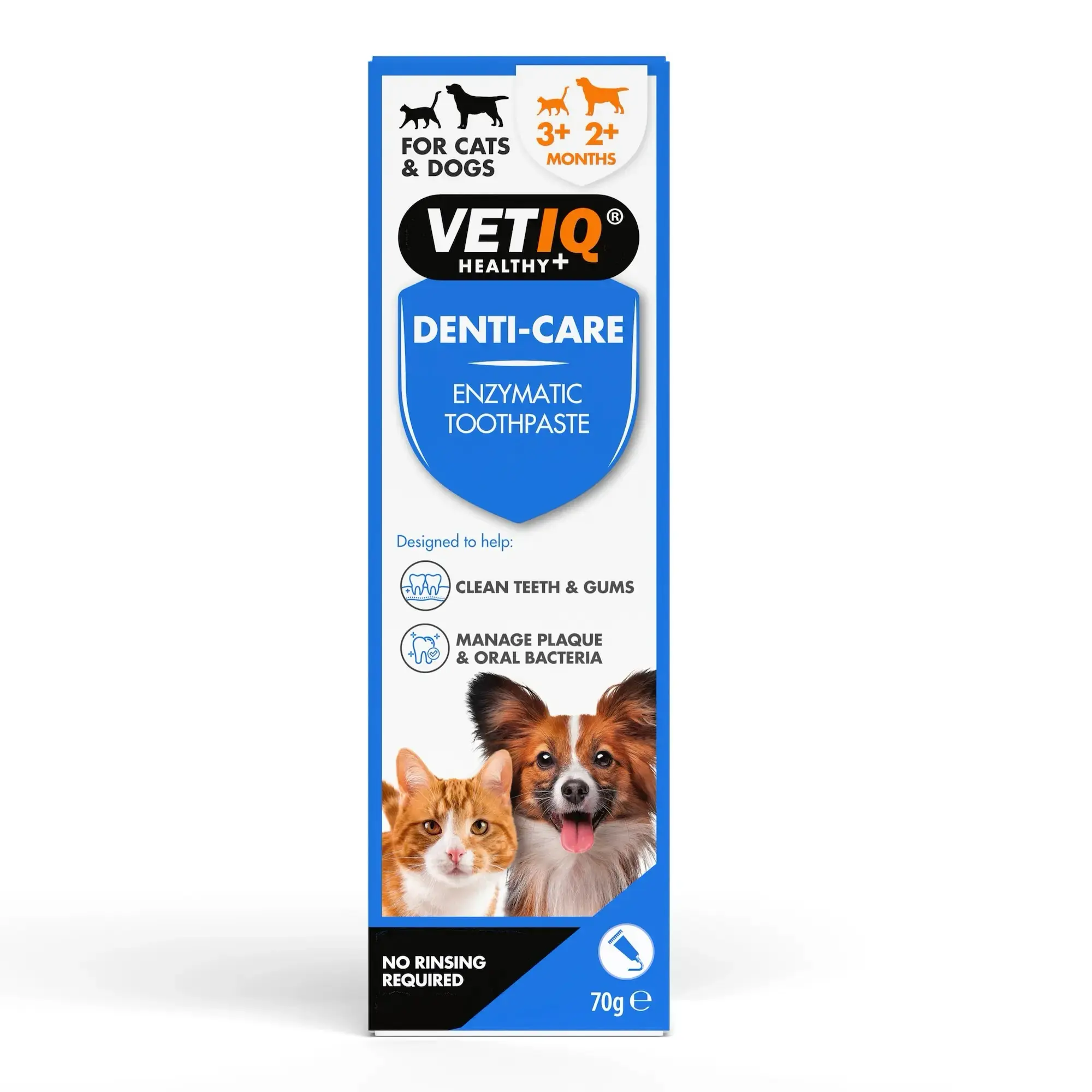
- VETIQ Enzymatic Toothpaste is a no-rinse, brush-friendly formula that helps break down plaque and freshens breath while you clean
- VETIQ Teething Gel soothes sore gums in puppies from 4 weeks old, handy if teething and tooth-brushing lessons are happening at the same time, and also suitable for older dogs with sensitive gums!
- VETIQ Denti-Care Powder mixes straight into food, a brilliant hands-off option for pets that don’t enjoy mouth handling
- VETIQ Denti-Care Solution goes straight into the water bowl, making dental care happen with every sip
- VETIQ Denti-Care Spray offers quick, fuss-free application, ideal for busy days or a pet who’s not in the mood for a brush
Whichever option suits your pet best, a little consistency now means healthier teeth, fresher breath, and a lot more happy, toothy grins down the line.
How to clean your pet’s teeth FAQs
Q: How often should I clean my pet’s teeth?
A: Aim for daily brushing where possible, though 3 to 4 times a week still offers real protection against plaque and tartar build-up.
Q: What’s the best age to start brushing a puppy or kitten’s teeth?
A: The earlier the better! Getting puppies and kittens used to gentle handling from just a few weeks old helps them grow up comfortable with the whole process.
Q: Can I use human toothpaste on my pet?
A: No! Human toothpaste often contains fluoride and xylitol, both unsafe for pets, so stick to a toothpaste made specifically for pets.
Q: My cat won’t tolerate brushing, what are my options?
A: Dental powders, sprays and water additives all offer plaque and tartar support without any brushing involved, and cats who dislike handling tend to get on with these especially well.
Q: How do I know if my pet has dental disease?
A: Keep an eye out for bad breath, red or swollen gums, visible tartar and a reluctance to eat. If you spot any of these, a vet check is the best way to find out what’s going on.
Q: Do dental chews actually work, or do I still need to brush?
A: Dental chews for pets help thanks to the natural scrubbing action of chewing, but they work best as a sidekick to brushing rather than a full replacement for it.
Q: Is bad breath always a sign of a dental problem?
A: Not always, but persistent “dog breath” (or cat breath!) is one of the most common early signs of plaque build-up or gum disease, so it’s always worth a closer look.
Q: How long does it take for a pet to get used to teeth cleaning?
A: It varies from pet to pet, but most settle into it within 2 to 4 weeks of short, consistent sessions and plenty of praise along the way.