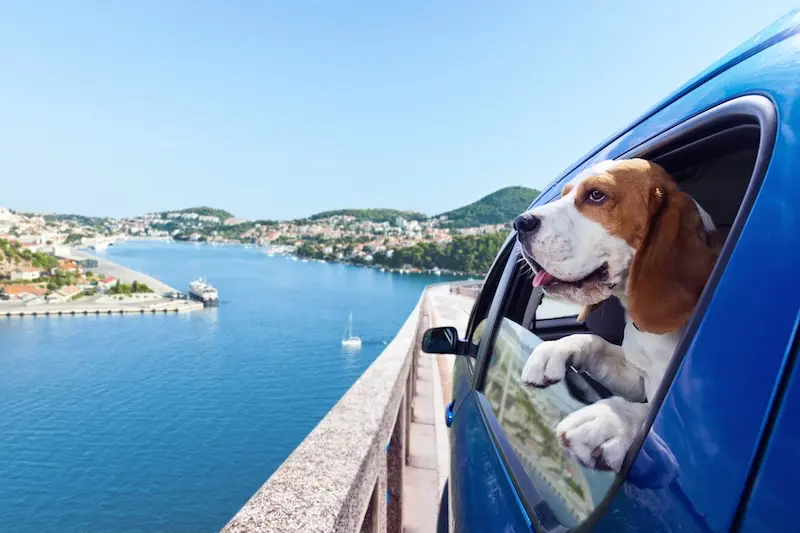
Reducing dog anxiety during long car journeys starts with making the car feel safe, familiar, and far less like a suspicious metal kidnapper on wheels!
Some dogs leap into the back seat like they were born for the open road, with their ears flapping and nose pressed to the window, living their absolute best life. Others treat every trip as a deeply unwelcome ambush, engineered by the one person they used to trust!
If your dog falls into that second camp, take heart knowing that travel stress is very common and can almost always be improved with a bit of planning, patience, and a calmer journey routine. The road to a more relaxed ride might be shorter than you think, so here are six practical tips to help get you both there!
#1. Start reducing dog anxiety before the big journey
A six-hour motorway haul is nobody’s idea of a gentle introduction, least of all a dog’s! If the longest trip your dog has taken was from the sofa to the kitchen, jumping straight into a cross-country road trip is a recipe for stress all round.
Instead, build up gradually. Start by sitting together in a parked car for a few minutes with the engine off; no pressure, no movement, just getting acquainted with the machine. Then try running the engine without going anywhere. From there, take a short loop around the block, and over time, nudge trips a little longer until a longer journey feels routine rather than remarkable.
Wherever possible, end practice trips somewhere the dog genuinely enjoys, like a favourite park, a beach, or a friend’s house with a garden. This helps the car begin to feel like the start of something good, rather than a one-way ticket to the vet.
Mixing up destinations makes a real difference; a dog who only ever travels for check-ups will quickly associate the car with dread, and once that association sets in, it takes patience and plenty of good detours to undo it.
#2. Check whether it is anxiety, motion sickness, or both
Before reaching for any solution, it is worth working out what’s actually going on. Some dogs look anxious in the car, not because they are scared, but because they genuinely feel unwell, and a queasy dog may need a quite different approach from one who is mainly frightened. Left unaddressed, the two issues have a tendency to make each other considerably worse.
Keep an eye out for:
- Panting, drooling or repeated lip licking
- Whining, trembling or pacing
- Restlessness or an inability to settle
- Refusing to get into the car
- Vomiting or retching
- Trying to hide or escape
These signs can overlap between anxiety and motion sickness, making them surprisingly easy to confuse. Younger dogs and puppies are generally more prone to car sickness, and if a dog repeatedly feels rotten on every journey, it is no wonder they stop RSVPing yes to road trips. The car stops feeling like an adventure and starts feeling like a warning.
If vomiting, severe distress or persistent sickness is a regular feature of car journeys, it is worth speaking to a vet. There may be an underlying cause that needs addressing before any practical tips can make a real difference!
#3. Create a cosy, safe travel spot
Dogs tend to feel calmer when they know exactly where they are supposed to be. A predictable, secure and comfortable setup in the car can make a surprisingly significant difference to how a dog handles the journey; think of it as their own little travelling den!
A suitable seatbelt harness, travel crate, carrier or boot guard keeps the dog safely contained, which is better for them and far less distracting for the driver. Bring a familiar blanket, bed or soft toy that smells like home; that comforting whiff of something recognisable can work wonders for a nervous traveller.
Make sure to also keep the car cool and well-ventilated, avoid blasting loud music, and consider window shades if passing traffic or fast-moving scenery seems to wind the dog up.
The goal is a travel space where the dog can sit, lie down and genuinely settle, not perch anxiously on the edge of the seat watching the motorway blur past and willing it all to end!
#4. Keep food, water and tummy comfort in mind
An unsettled stomach can turn a road trip into a drama very quickly, and a long journey is emphatically not the time to discover that a new doggy snack has strong opinions about your car’s upholstery!
Avoid a large meal right before setting off, and keep the dog’s usual routine as close to normal as possible. Pack plenty of water and a travel bowl for stops along the way, and bring familiar food in case of delays. Treats can be useful for positive reinforcement, but go carefully, as too many snacks on a moving car journey may not agree with a dog who is already feeling queasy.
For dogs who chew to self-soothe, a safe chew toy is a solid option: it keeps them calmly occupied without putting any extra pressure on the stomach.
#5. Plan breaks before your dog starts complaining!
Regular breaks aren’t a luxury on a long drive; they’re a practical necessity, especially with a dog on board. A chance to stretch, sniff around, drink some water and spend a penny does more for travel anxiety than almost anything else.
Build stops into the route before setting off rather than leaving them to chance. For longer journeys, pausing roughly every two to three hours gives most dogs a useful reset, but remember that every dog is different, and some will make their feelings known well before that.
Wherever possible, opt for quieter spots rather than busy service stations; unfamiliar dogs, loud lorries and a wall of overwhelming smells can undo a lot of the calm built up during the drive. Allow time for a proper walk, some water and a genuine pause, not just a rushed scramble back behind the wheel.
Always keep the dog on a lead before opening any door or the boot. Even the calmest, most road-seasoned dog can bolt in an unfamiliar place, and a busy car park or country road is not where anyone wants to find that out!
#6. Stay calm, predictable and patient
Dogs are extraordinarily good at reading the energy in a room or a car! A rushed, noisy or chaotic departure can set the tone for the entire journey before you have even reached the first roundabout.
Pack the car and get everything ready before bringing the dog out. Keep departures low-key and matter-of-fact; big dramatic send-offs can accidentally signal that something out of the ordinary is happening. Avoid scolding anxious behaviour, and instead praise calm moments quietly and warmly.
Drive smoothly where possible, keep the setup consistent from trip to trip, and if your dog is genuinely very distressed, take a step back rather than pushing on. Gradual progress over several weeks will always outperform repeated forced journeys and the quiet hope that things will sort themselves out.
In the end, a calm owner, a familiar blanket and a well-planned route can do a remarkable amount of heavy lifting, and that is something every dog (and driver) deserves!

VETIQ Serene Calming products for reducing dog anxiety on the go
For dogs who need a little extra support on travel days, VETIQ has them (and their humans!) well and truly covered!
The VETIQ Serene Calming range offers a format to suit every dog and every situation:
- Serene Calming Ointment — fast-acting and applied directly to the nose, it can help dogs relax in as little as 20 minutes, making it ideal when an unexpected journey catches everyone off guard.
- Serene Calming Tablets — designed for general travel nerves, helping pets relax without any sedative effect, and safe for prolonged use.
- Serene Calming +Plus Tablets — formulated for larger or more anxious breeds who need a little more backup, suitable for both one-off events and longer-term support.
- Serene Calming Drops — a daily liquid supplement using amino acids, vitamins and minerals to gently reduce tension without drowsiness.
- Serene Calming Supplement Chews — natural ingredients in a roasted meat flavour that make relaxation feel suspiciously like treat time.
All products are made with natural ingredients, carry no sedative effect, and can be used for both one-off stressful events and longer-term anxiety support.
So, before your next summer road trip, explore the VETIQ Serene Calming range, because every dog deserves to arrive at their destination with their tail still wagging!
Reducing dog anxiety FAQs
Q: How can dog anxiety during long car journeys be reduced?
A: We recommend building up car exposure gradually with short, low-pressure trips, keeping a consistent and comfortable travel setup, planning regular breaks, and staying calm during departures. For dogs who need extra support, natural calming products such as the VETIQ Serene Calming range can also help take the edge off travel stress!
Q: What are the signs of dog anxiety in the car?
A: Common signs include panting, drooling, whining, trembling, restlessness, refusing to get into the car, and, in some cases, vomiting or trying to hide. These symptoms can overlap with motion sickness, so it is worth observing a dog carefully across several journeys.
Q: What is the difference between dog travel anxiety and motion sickness?
A: Travel anxiety is primarily fear-based, while motion sickness is a physical response to movement, though both can produce similar symptoms such as drooling, panting and unsettled behaviour. If vomiting or retching is a regular feature of car journeys, a vet visit is the best first step!
Q: How often should a dog be given a break on a long car journey?
A: For most dogs, stopping roughly every two to three hours provides a useful reset; time to stretch, sniff, drink and relieve themselves. Quieter rest spots are preferable to busy areas, where noise and unfamiliar smells can quickly undo the calm built up during the drive.
Q: How should a dog be prepared for its first long car journey?
A: Start well before the trip by sitting with the dog in a parked car, then gradually progress to short drives and extend journey length over time. Ending practice trips somewhere the dog genuinely enjoys helps build a positive association with the car.
Q: What natural products can help with dog travel anxiety?
A: The VETIQ Serene Calming range includes tablets, drops, ointment and supplement chews, all made with natural ingredients to support relaxation during stressful events like car journeys. Key ingredients feature across the range and can promote calm behaviour without sedation!