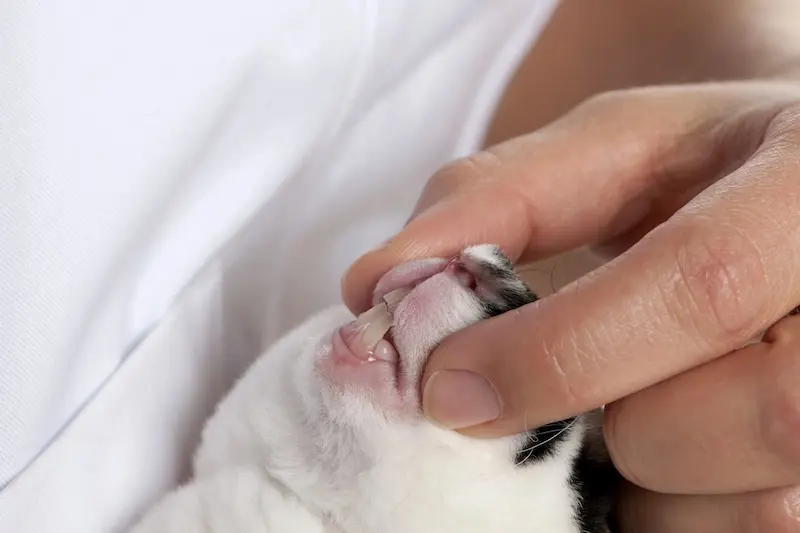
Dental care for small pets looks a little different to the dog and cat routines you might already know, and that’s because rabbits, guinea pigs and hamsters have teeth that work in their own unique way!
Good oral health still matters just as much for these tiny companions, helping them eat comfortably, stay pain-free and enjoy every mealtime, so here’s what makes your small pet’s teeth different and the daily habits that keep them healthy!
What makes dental care for small pets different
If you’ve ever brushed a dog’s or cat’s teeth, you’ll know the drill: their teeth, like ours, reach a fixed size once fully grown. Your small pet plays by different rules entirely.
Rabbits’ and guinea pigs’ teeth grow continuously throughout their lives, including their back cheek teeth, not just their front incisors. Left unchecked, that constant growth can lead to overgrown or misaligned teeth, known as malocclusion.
Hamsters are a little different again; their front incisors keep growing too, but their cheek teeth stay a fixed size, much like your dog’s or cat’s.
This is exactly why you won’t find a toothbrush in a small pet’s dental care kit! Their teeth need to be worn down naturally through chewing and the right diet, which makes daily habits far more important than tools.
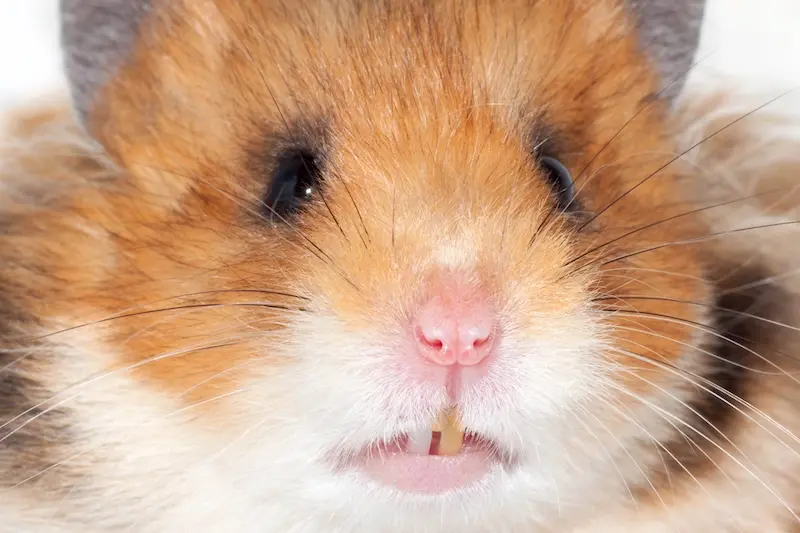
Hay: The foundation of small pet dental care!
For your rabbit or guinea pig, chewing through fibrous hay is what wears their teeth down evenly and keeps them at a healthy length. It’s dental care and dinner, all in one!
Timothy hay should make up the bulk of their daily diet, alongside fresh leafy greens and a small, measured portion of pellets. Guinea pigs also need a daily dose of vitamin C, since they can’t produce it themselves.
Hamsters have different tastes. A balanced, nutritionally complete pellet mix suits them best, topped up with small amounts of fresh veg and the occasional seed as a treat.
Safe chew items, like untreated wood, are a great way to add a bit of enrichment alongside their diet, and your small pet will probably thank you for the extra gnawing practice.
Getting a small pet used to being checked
A quick at-home check can catch problems early, but it only works if your small pet feels safe being handled.
- Start with short, calm sessions: a gentle stroke around the face, building up to briefly lifting the lip to peek at those front incisors. Keep it to a few seconds at a time, then reward with a favourite treat or a fuss.
- Front incisors should look even in length and meet neatly when the mouth is closed: Anything that looks overgrown, crooked or off to one side is worth mentioning to your vet.
- Cheek teeth are trickier: They sit too far back to check safely at home, so leave that job to the professionals at your next check-up.
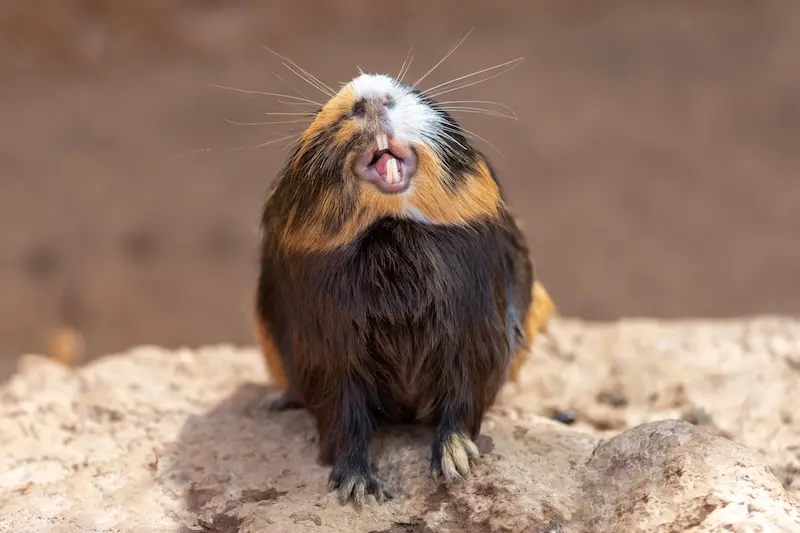
Dental care for small pets: signs to watch for
Dental problems in small pets can creep up quietly, so it helps to know what you’re looking for:
- Drooling or a wet chin
- Dropping food or choosing soft food over hay
- Weight loss or a smaller appetite
- Fewer or smaller droppings than usual
- Front teeth that look overgrown or uneven
- Reluctance to eat or sudden fussiness at mealtimes
Rabbits and guinea pigs rely on near-constant grazing to keep their gut moving, so if your small pet stops eating for more than a few hours, it’s time to call the vet straight away.
Overgrown or misaligned teeth usually need trimming by a vet, so this isn’t a DIY job. The good news is that dental issues are very manageable once you catch them early.
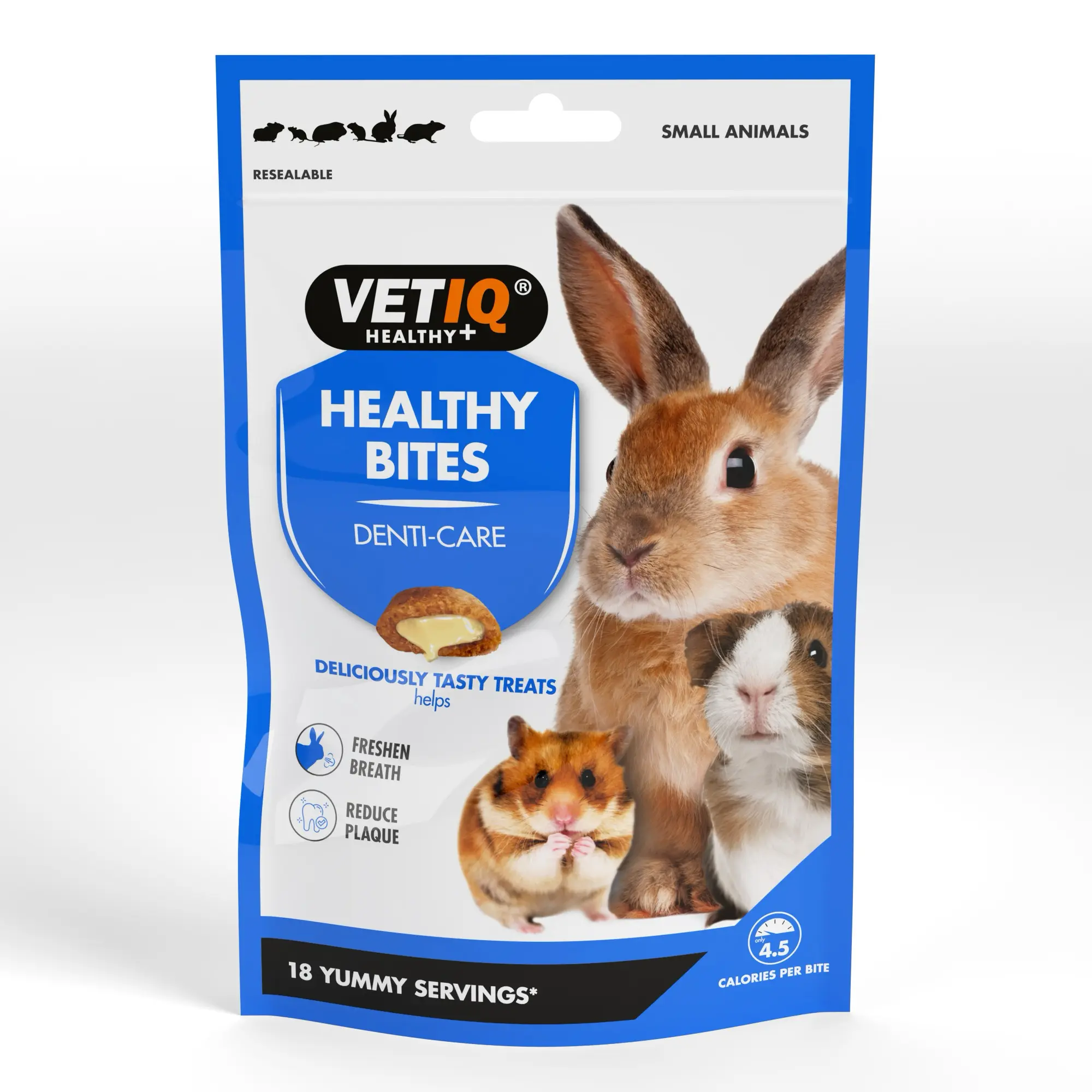
Healthy Bites Denti-Care supports dental care for small pets
Good hay, a few gentle checks and a watchful eye go a long way, and a little extra support never hurts.
VETIQ Healthy Bites Denti-Care For Small Animals have been developed to help maintain your small pet’s oral health, making a tasty daily addition to a hay-rich diet. With a crispy cereal shell and a cream-filled centre, they’re packed with eucalyptus and coconut oil to help fight the formation of plaque, vitamin C for healthy gums, pomegranate to help control tartar build-up, and clove oil for a fresher finish.
At under 4 calories per treat, with no artificial colours, flavours or added sugar, they’re an easy, tasty way to support your small pet’s dental care routine, and give your furry friend something extra to look forward to!
Dental care for small pets FAQs
Q: How often should I check my small pet’s teeth?
A: A quick peek at your rabbit, guinea pig or hamster’s front teeth once a week is enough to catch most problems early. Keep it brief and follow up with a treat, so it stays a positive experience rather than a wrestling match!
Q: What are the most common dental problems in small pets?
A: Overgrown teeth and malocclusion are the most common issues in rabbits and guinea pigs, usually caused by not enough fibrous hay in the diet. Hamsters are more likely to have overgrown front incisors than cheek teeth problems.
Q: Can I brush my rabbit’s or guinea pig’s teeth?
A: Not in the way you would a dog’s or cat’s. Their teeth grow continuously, so daily wear from hay and the right diet does the job that brushing does for other pets. Regular vet check-ups are the best way to keep on top of the teeth you can’t see at home.
Q: Why do rabbits and guinea pigs need so much hay?
A: Hay keeps their digestive system moving and wears their teeth down at the same time. Aim for a pile roughly the size of your pet’s body, available at all times, not just as an occasional extra.
Q: Can small pets get toothache?
A: Yes, and it’s often what causes them to eat less or go off their food altogether. Small pets tend to hide pain well, so a drop in appetite is usually the clearest sign that something’s wrong.
Q: What should I do if my small pet stops eating?
A: Treat it as an emergency! Rabbits and guinea pigs need to eat little and often to stay healthy, so if your pet goes off their food for more than a few hours, get them to a vet as soon as you can.
Q: How do I know if my small pet needs a dental trim?
A: Overgrown or misaligned teeth usually need a vet’s help to correct safely. If your pet’s front teeth look longer than usual, or their eating habits change, it’s worth booking a check-up.
Q: Are dental treats safe for rabbits and guinea pigs?
A: Yes, as long as they’re made for small pets specifically. VETIQ Healthy Bites Denti-Care For Small Animals are designed to sit alongside a hay-rich diet, giving your small pet a tasty way to support their dental care between vet check-ups.