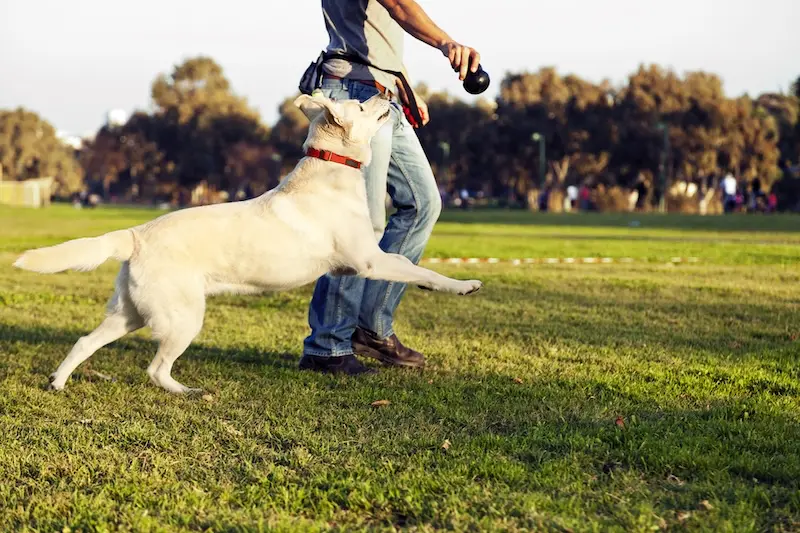
Dog joint stiffness after a long walk or an extra-boisterous play session is more common than you’d think, especially once all the excitement wears off!
One minute they’re tearing around the park like a puppy again; the next they’re taking their time getting up off the sofa for dinner.
A bit of stiffness after a busy day is usually nothing to worry about, and there’s plenty you can do to help your furry friend bounce back faster!
What causes dog joint stiffness after exercise?
Exercise is great for dogs, but a bigger day than usual, extra playtime at the park, a longer walk, or a proper zoomies session asks more of their muscles and joints than they’re used to. That extra effort can leave things feeling tight and achy for a little while afterwards.
Normal muscle soreness vs. dog joint stiffness
A bit of tiredness after a good walk is completely normal, and it usually settles within a day. Dog joint stiffness that lingers longer than that, or keeps cropping up after every outing, is worth paying a bit more attention to.
Which dogs get stiffer after activity than others
Some dogs feel it more than others. Senior dogs, larger breeds, and any dog coming back to exercise after a break are more likely to feel stiff after a busy session. The same goes for a day that was simply bigger than usual, an extra-long walk or a game of fetch that ran on a bit longer than planned!
Tips for easing dog joint stiffness after exercise
The good news is that there’s plenty you can do before, during and after exercise to ease dog joint stiffness and help your dog feel like themselves again.
Warm up before you head out
A slow, gentle walk on the lead for a couple of minutes before anything more energetic gives muscles and joints a chance to warm up properly. Cold joints are more prone to strain, so skip the mad dash straight from front door to full sprint.
Cool down gradually, not all at once
Try to ease off the pace towards the end of a walk or play session rather than stopping dead. A slower final stretch home gives your dog’s body a chance to wind down gradually, rather than going from full speed to a standstill.
Give recovery time after a big day
After a bigger day than usual, stick to gentle lead walks for toilet breaks rather than diving straight back into the park or letting them leap onto the sofa. Giving muscles and joints a proper chance to settle helps stiffness pass more quickly.
Try gentle warmth or a light massage
A warm, never hot, compress or a cosy, supportive bed can help ease things along after exercise. If your dog enjoys being touched, some gentle, slow strokes along the muscles can help too. Just stop if they seem uncomfortable.
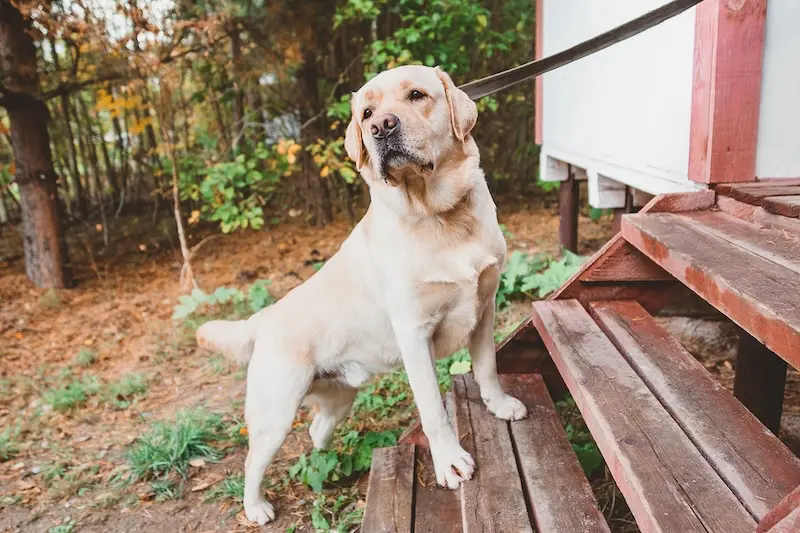
Everyday habits that help prevent dog joint stiffness
A few small changes to your dog’s everyday routine can go a long way towards keeping dog joint stiffness from becoming a regular after-walk visitor.
Keep exercise regular and low-impact
Several shorter walks tend to be kinder on joints than one long, high-intensity outing, especially for dogs who are prone to feeling stiff. Try to keep high-impact games like ball chasing to a sensible level, particularly if your dog isn’t used to it.
Keep an eye on your dog’s weight
Carrying a bit of extra weight puts real pressure on joints, so keeping your dog at a healthy weight is one of the simplest ways to help prevent stiffness after exercise. Your vet can help you work out what a healthy weight looks like for your dog’s breed and size.
Pick softer ground where you can
Grass and sand are much kinder on joints than pavement or concrete, so it’s worth choosing softer routes where you can. A comfy, supportive bed at home helps too, especially after a busy day out.
When does dog joint stiffness need a vet’s attention?
Most dog joint stiffness settles down with a bit of rest and TLC, but it’s worth knowing when to get a professional opinion.
If your dog’s stiffness lasts more than a day or two, they’re limping, reluctant to get up or jump, or things seem to be getting worse rather than better, it’s best to book a vet check rather than wait it out.
A note for older or less active dogs
Stiffness can be more persistent in senior dogs, so it’s worth mentioning any changes at their next check-up. A vet can help put together a longer-term plan to keep them comfortable and active.
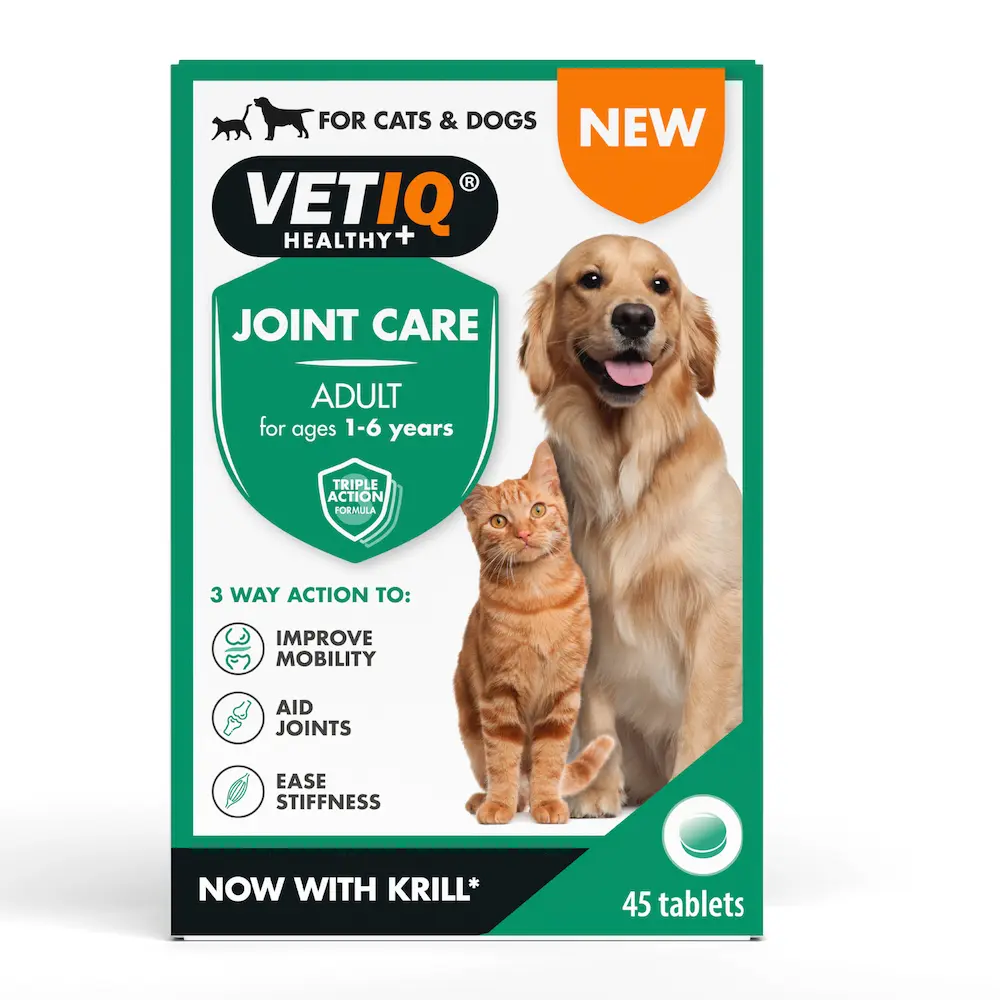
Ease dog joint stiffness with VETIQ’s Joint Care range
If your dog’s joints could use a bit of extra support alongside these everyday habits, the VETIQ Joint Care range has an option to suit most routines:
- VETIQ Joint Care Adult Tablets: These combine Glucosamine HCL, Chondroitin Sulphate and Manganese in a strong triple-action formula, along with Krill Meal for easily digestible Omega-3s and Hyaluronic Acid to help keep joints moving smoothly. Great for pet parents who like a straightforward daily supplement!
- VETIQ Joint Care Supplement Chews: For fussier eaters, these chews pack in Green-Lipped Mussel, Glucosamine, Salmon Oil and Hyaluronic Acid, all in a tasty roasted meat flavour your dog won’t need convincing to eat!
- Healthy Treats Joint Care For Dogs: If you prefer to build joint support into treat time, these treats contain Glucosamine, Chondroitin and MSM in a low-calorie treat, just 6 kcal each, so it’s an easy way to support mobility without any fuss!
Whichever option suits your dog best, a little extra joint support can make all the difference between a slow start after exercise and getting straight back to their paw-fect self!
Easing dog joint stiffness after exercise FAQs
Q: What causes dog joint stiffness after exercise?
A: A bigger day than usual, extra playtime, or a longer walk than your dog’s used to can leave muscles and joints working harder than normal. This often causes some temporary stiffness once the excitement wears off!
Q: How long should stiffness after exercise last?
A: Mild stiffness usually settles within a day. If it’s lasting longer than that, or keeps happening after every outing, it’s worth keeping an eye on.
Q: Should I still walk my dog if they seem stiff?
A: Yes, but keep it gentle! A short, easy lead walk is usually better than skipping exercise altogether, as it helps keep joints moving without overdoing it.
Q: Can puppies get stiff joints after exercise?
A: It’s less common in puppies, but an extra-energetic play session can still leave them feeling a bit tired and stiff. If it happens often, we’d suggest a chat with your vet.
Q: What’s the quickest way to ease my dog’s stiffness after a walk?
A: A bit of rest, a warm and cosy spot to settle in, and a gentle cool-down at the end of exercise all help. We’d also suggest avoiding anything too high-impact until they’ve bounced back.
Q: When should I take my dog to the vet for joint stiffness?
A: We’d recommend booking a check-up if stiffness lasts more than a day or two, your dog is limping, or they seem reluctant to get up or jump. It’s always better to get it checked than wait it out.
Q: Can the VETIQ Joint Care range help with stiffness after exercise?
A: Yes! Our Joint Care Adult Tablets, Joint Care Supplement Chews and Healthy Treats Joint Care are all designed to support mobility and joint health alongside your dog’s everyday routine.
Q: Which VETIQ Joint Care product is right for my dog?
A: It depends on your dog’s preferences! Our tablets suit dogs who take supplements easily, our chews are great for fussier eaters, and our treats are perfect for building joint support into treat time!